About This Project
StayFinder began on the web, so for the mobile version I deliberately refactored the data fetching to the Django REST Framework — the best way to compare it with GraphQL was to build the same thing with both. React Native renders both Android and iOS, Django runs the backend, and room locations are drawn with the Google Maps API. To save time I chose Redux Toolkit for state management, and it earned its keep.
Technical Sheet
React-Native
Redux
TypeScript
Styled-Components
Sentry
Django
GoogleMapAPI
Heroku
Data From Map
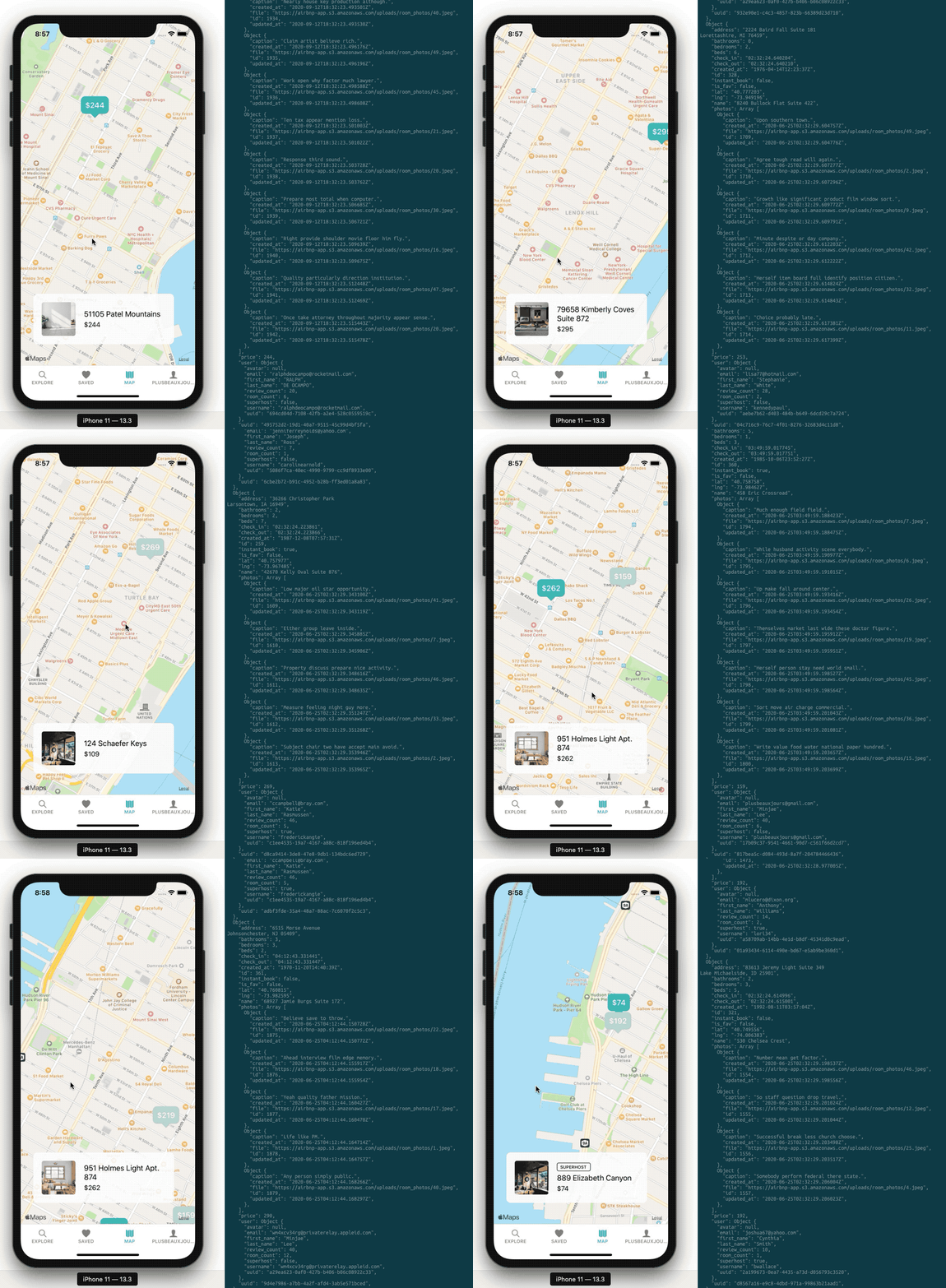
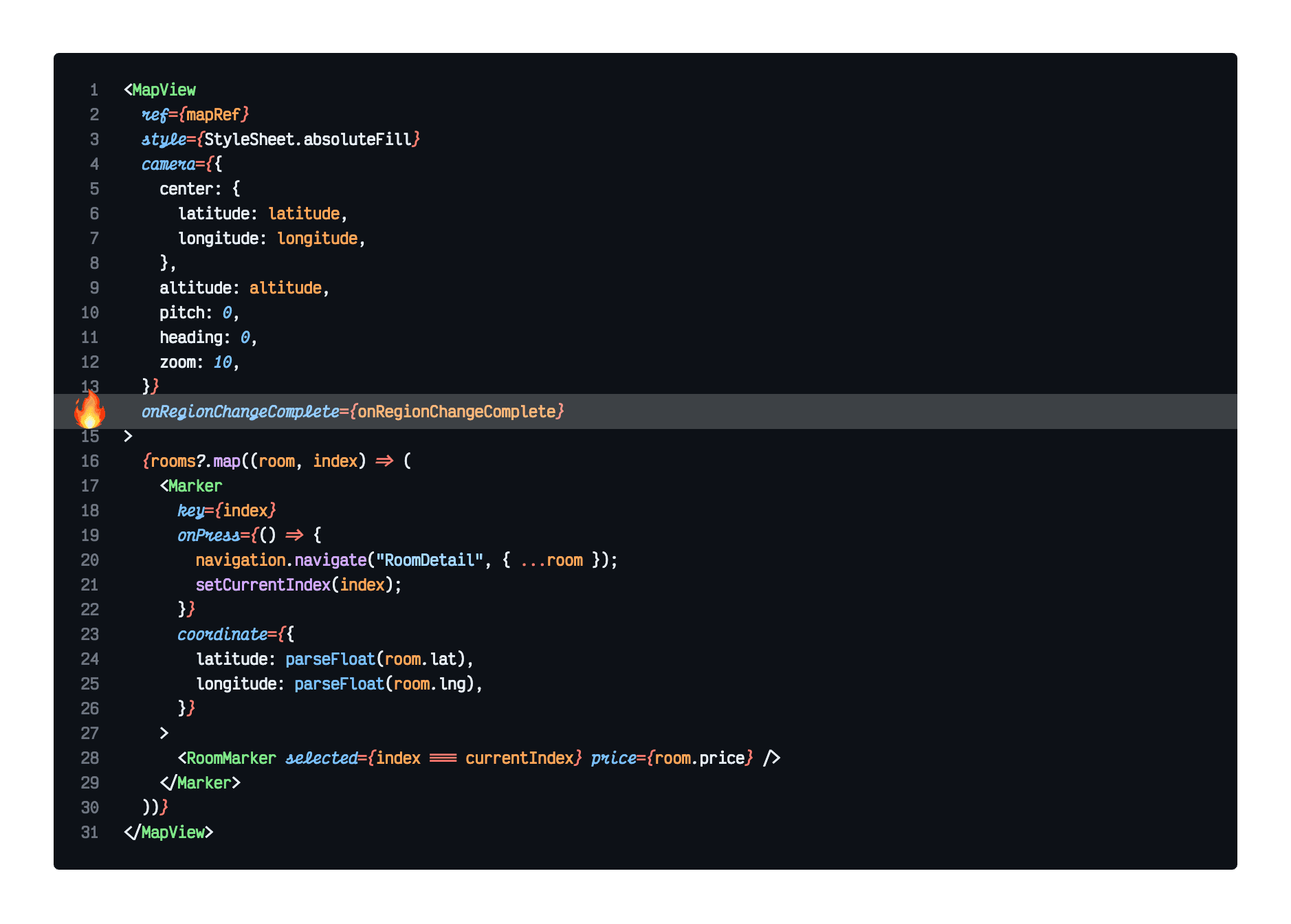
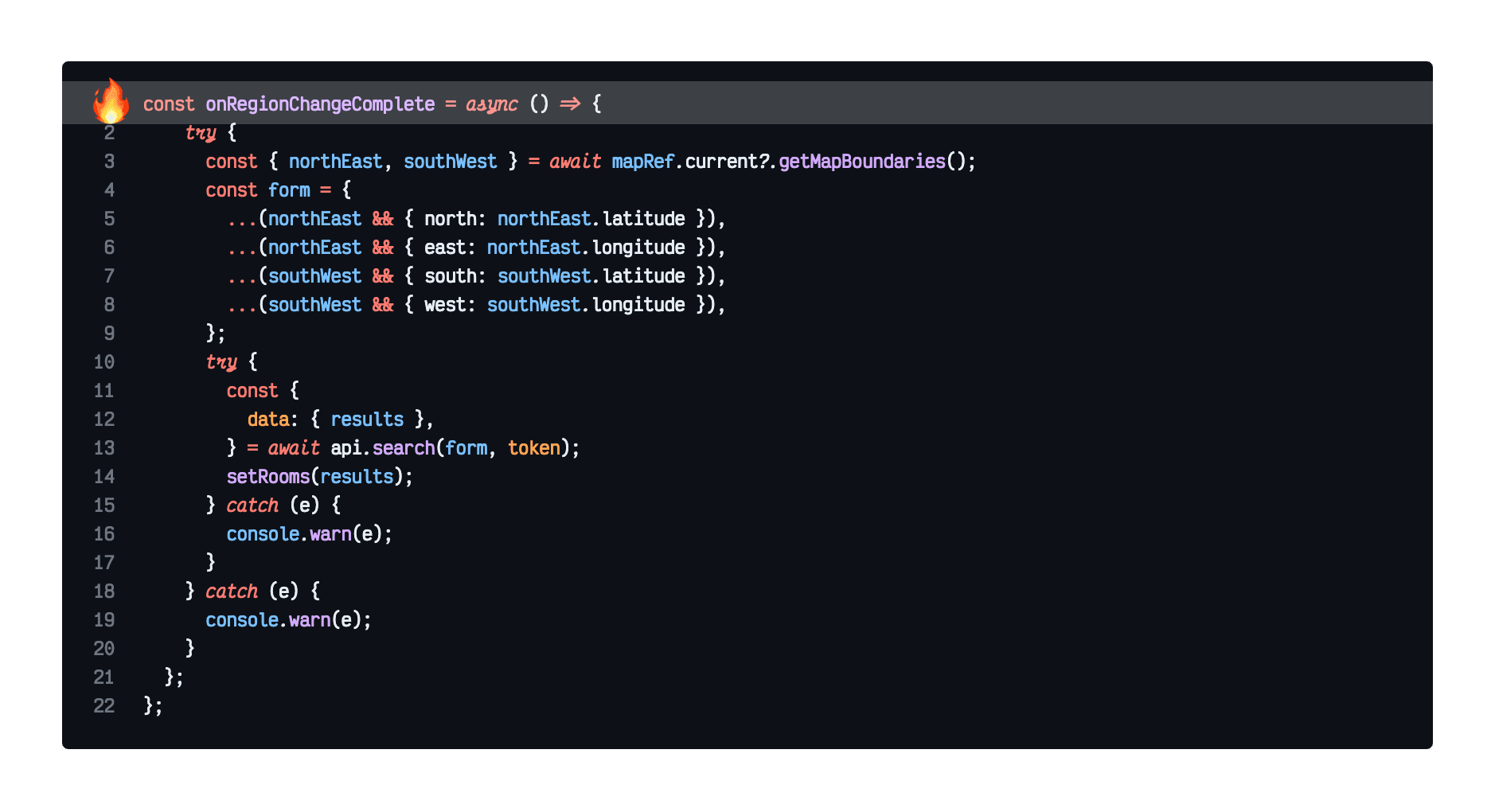
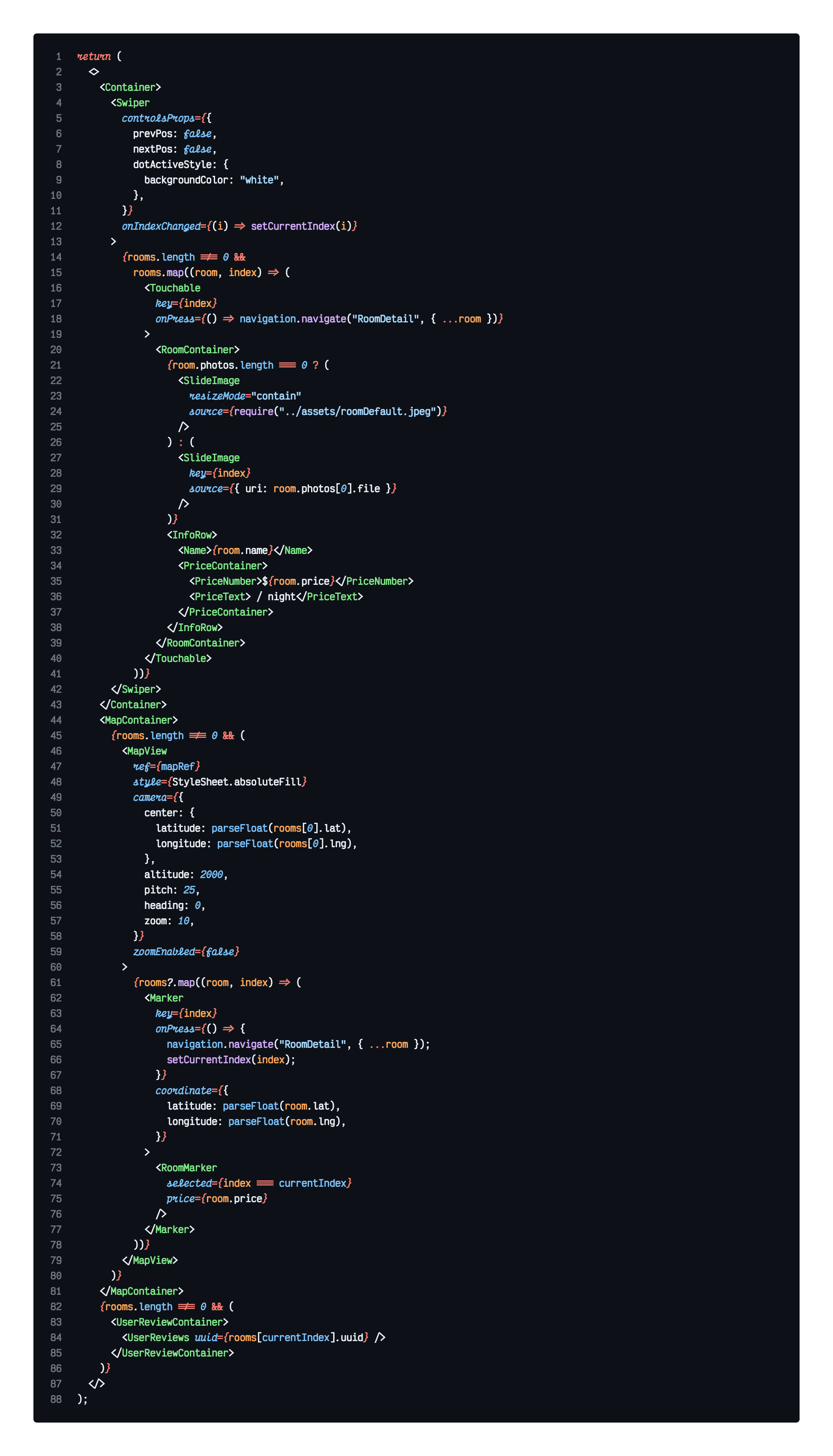
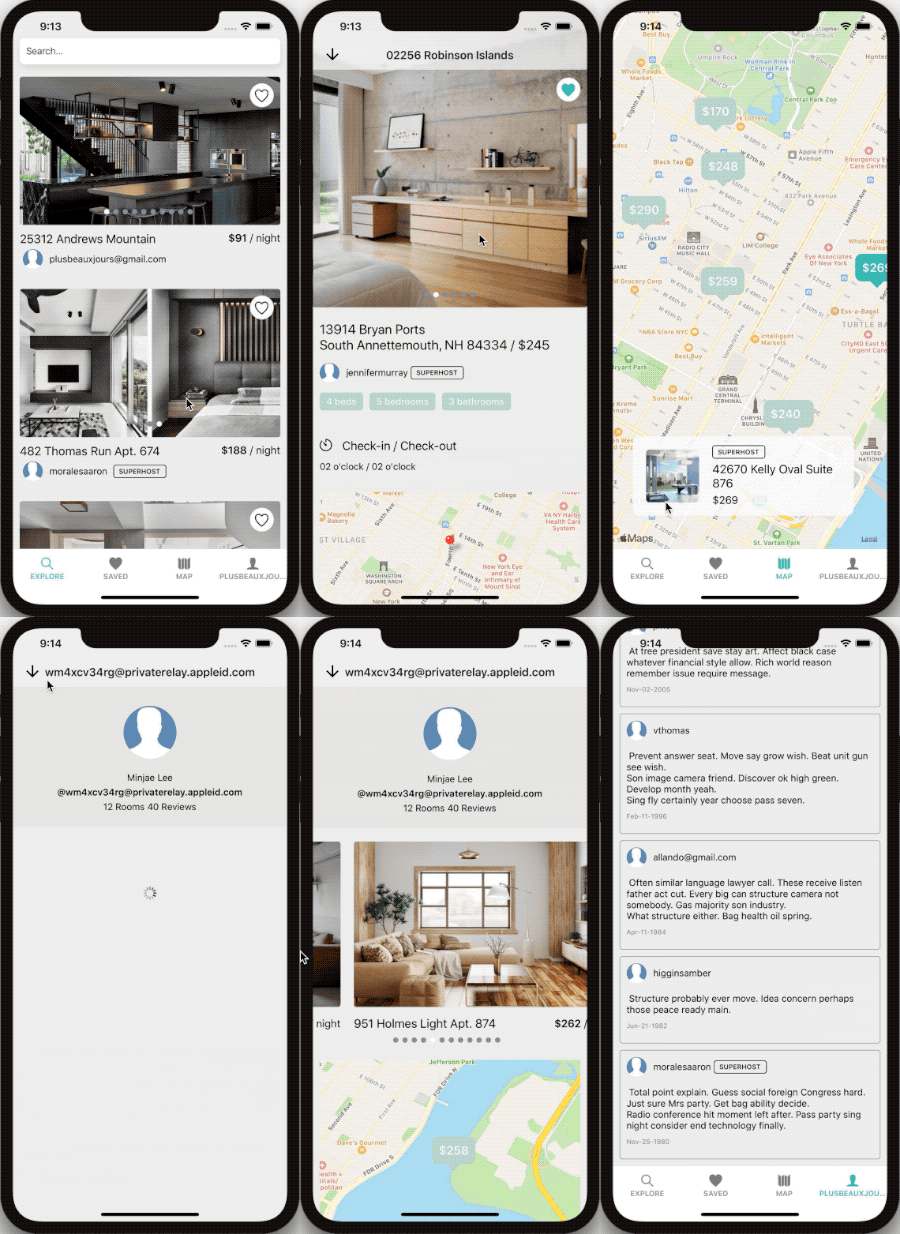
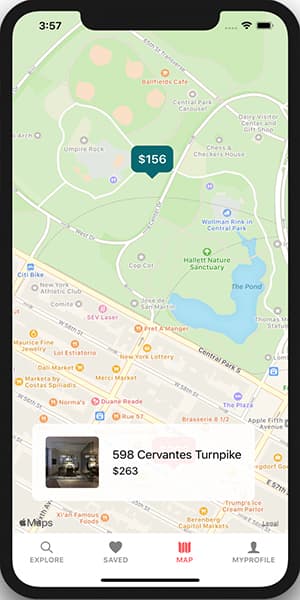
As you scroll and zoom, the onRegionChangeComplete method hands over the map's current latitude and longitude — so the map itself becomes the search input. Move the view, and the app knows exactly where you've landed.
Location From Data
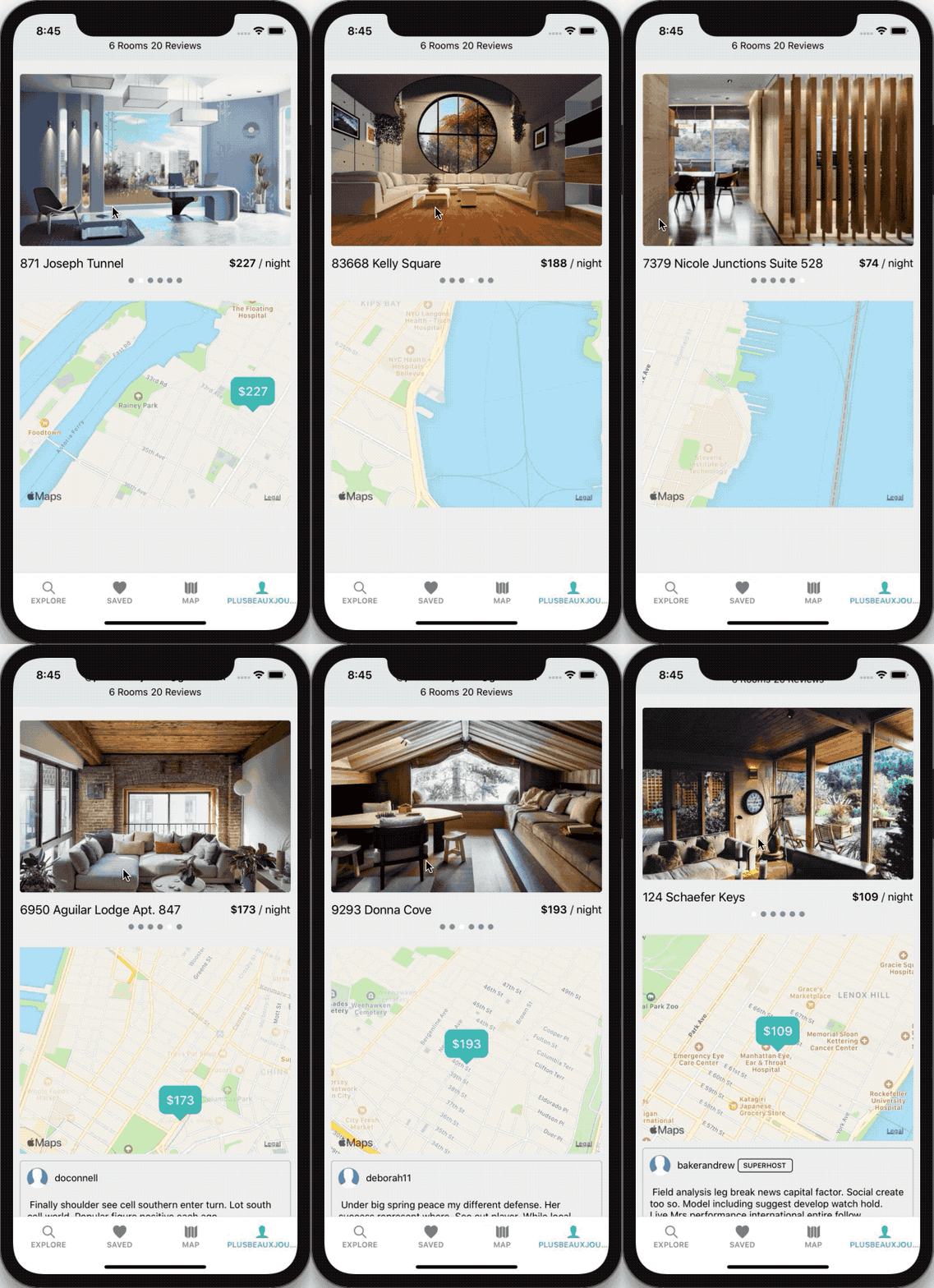
It works the other way, too: I wired a horizontal scroll view to the markers, so swiping through room cards animates the map and centers it on each room's coordinates.
#EDEDED
#35B8B3
Long Term Gains
My goal here was simple: finally understand Redux. Two years earlier, on my very first project, Redux defeated me — it was just too much for a beginner. This time, with Redux Toolkit, both the server and the mobile app were done in four weeks. Few things feel better than coming back to the tool that once beat you. Next on my list: MobX, and going deeper with the Google Maps API.